by: Mind the Climate - UniTO | data 17/09/2026
The physical effects of climate change are (almost) impossible to ignore: heatwaves, droughts and water shortages, wildfires, torrential rainfall and floods… The list goes on and on! But who is paying attention to what happens inside our minds? To be honest, that list makes us a little bit anxious and we have a feeling we’re not the only ones.
Climate change doesn’t just affect the environment. It can also influence how we sleep, our stress levels, our sense of safety and security about the future; and our everyday emotional wellbeing.
We are Alessia Visconti, Barbara Sini, Matteo Bracco and Paola Berchialla, researchers in computer science, biostatistics and psychology at the University of Turin. We want to understand and measure how climate-related events affect our mental wellbeing, sleep quality, and levels of anxiety and stress.
We want to create a simple app that uses anonymous questionnaires to take regular snapshots of our community’s mental wellbeing. By combining these snapshots with meteorological and environmental data, we can better understand the relationship between changes in our climate and those inside us.
With your help, we can turn data into concrete tools to support our communities, making them more aware, prepared, and resilient to face climate change and its impact on mental health.
We really need your help. To make this project happen, we need €14,000. But here’s the exciting part: we only need to raise half of that: €7,000. But why? Because every euro you donate will actually be worth two. The University of Turin believes so strongly in us and in this project that it has committed to matching every donation, euro for euro, once we reach the €7,000 fundraising target.
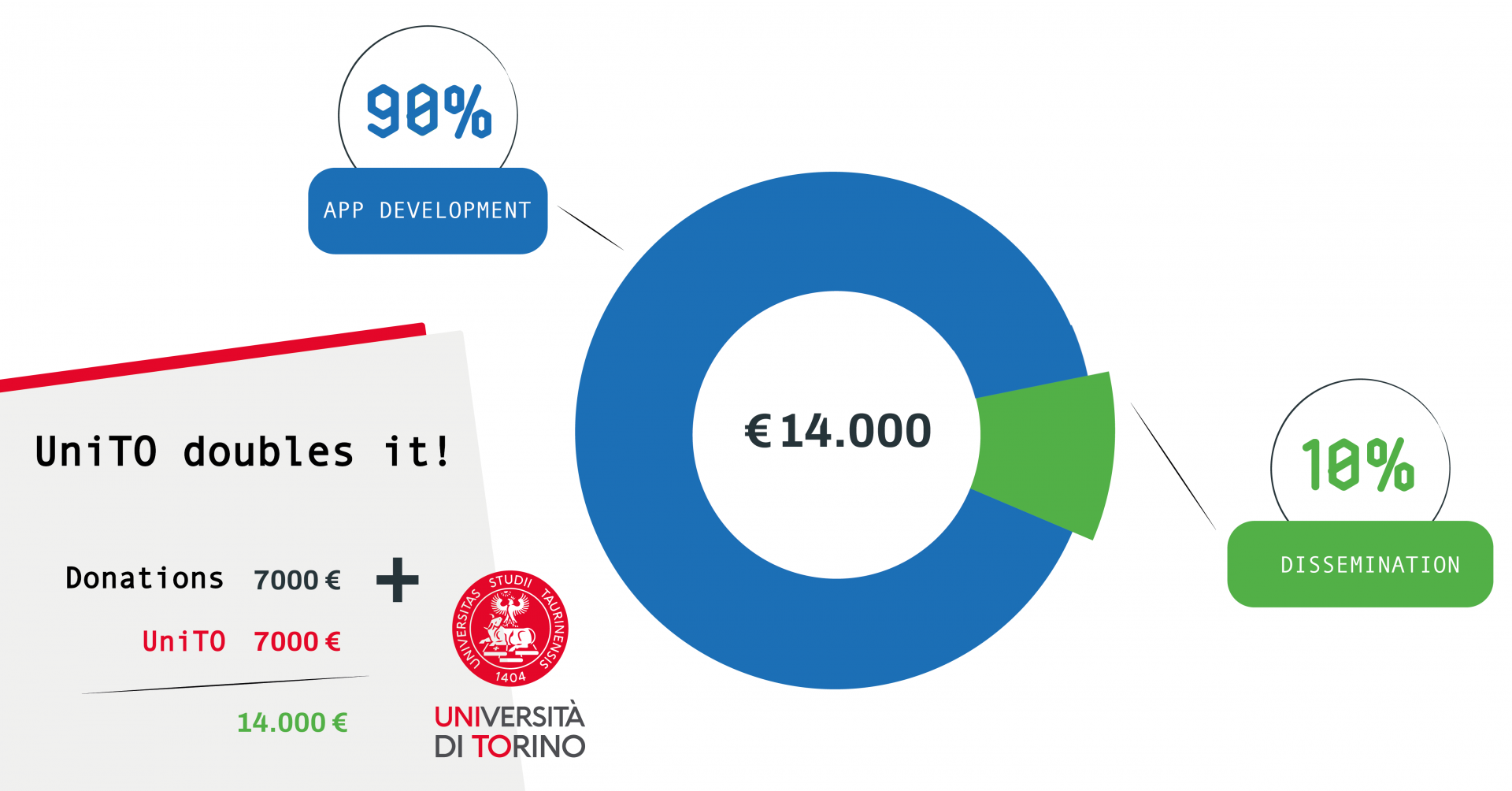
We want to develop a web platform, with a total cost of €12,500, that will allow us to:
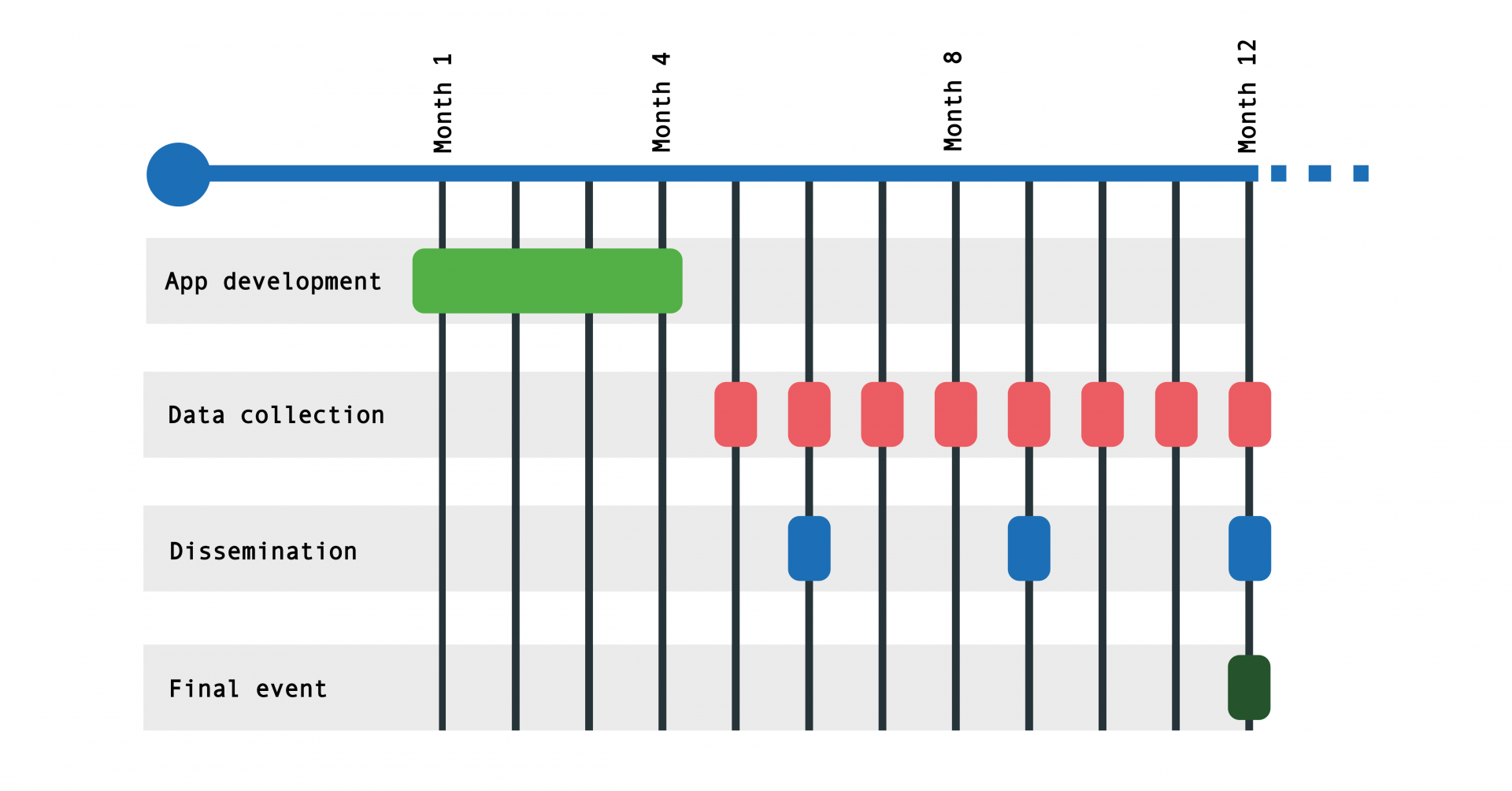
We also need €1,500 to organise 10 in-person outreach events across Piedmont at the end of the project. These events will allow us to share our findings directly with local communities and discuss what we have learned. We’ll also organise 10 online events for people outside Piedmont, which won’t cost us anything.
If we raise an additional €750, we can cover the app’s operating costs for another year.
If we raise an additional €4,000 (reaching a minimum target of €18,750, including UniTO’s matching contribution), we will hire a young researcher who, for at least three months, will work on developing concrete strategies to support targeted interventions in the areas and communities most affected by climate events. They will create communication channels between the various organisations involved, such as municipalities and emergency psychology associations; and support these organisations in developing intervention strategies, both in terms of identifying available funding and choosing the most appropriate ways to intervene.
Of course! By signing up for the app, you will become a protagonist of the research. You will be a real citizen scientist and help us firsthand understand how climate change affects mental wellbeing while building a more informed and connected community around mental health and environmental sustainability.
Finally, by promoting the app among your networks and contacts, you will help us reach different communities and local organisations, expanding participation and making our analyses more robust, representative, and useful for everyone.
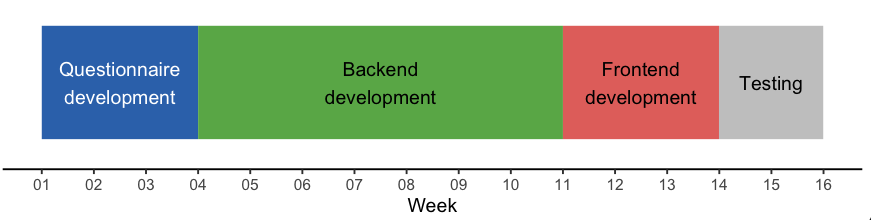
We expect the development to take around four months.
But if you’re too excited to wait and just too curious, we’ve come up with various rewards tailored to your donation: with a minimum donation of €10, you’ll get early access to the app, while with a €400 donation, you can even take part in co-designing it with us!
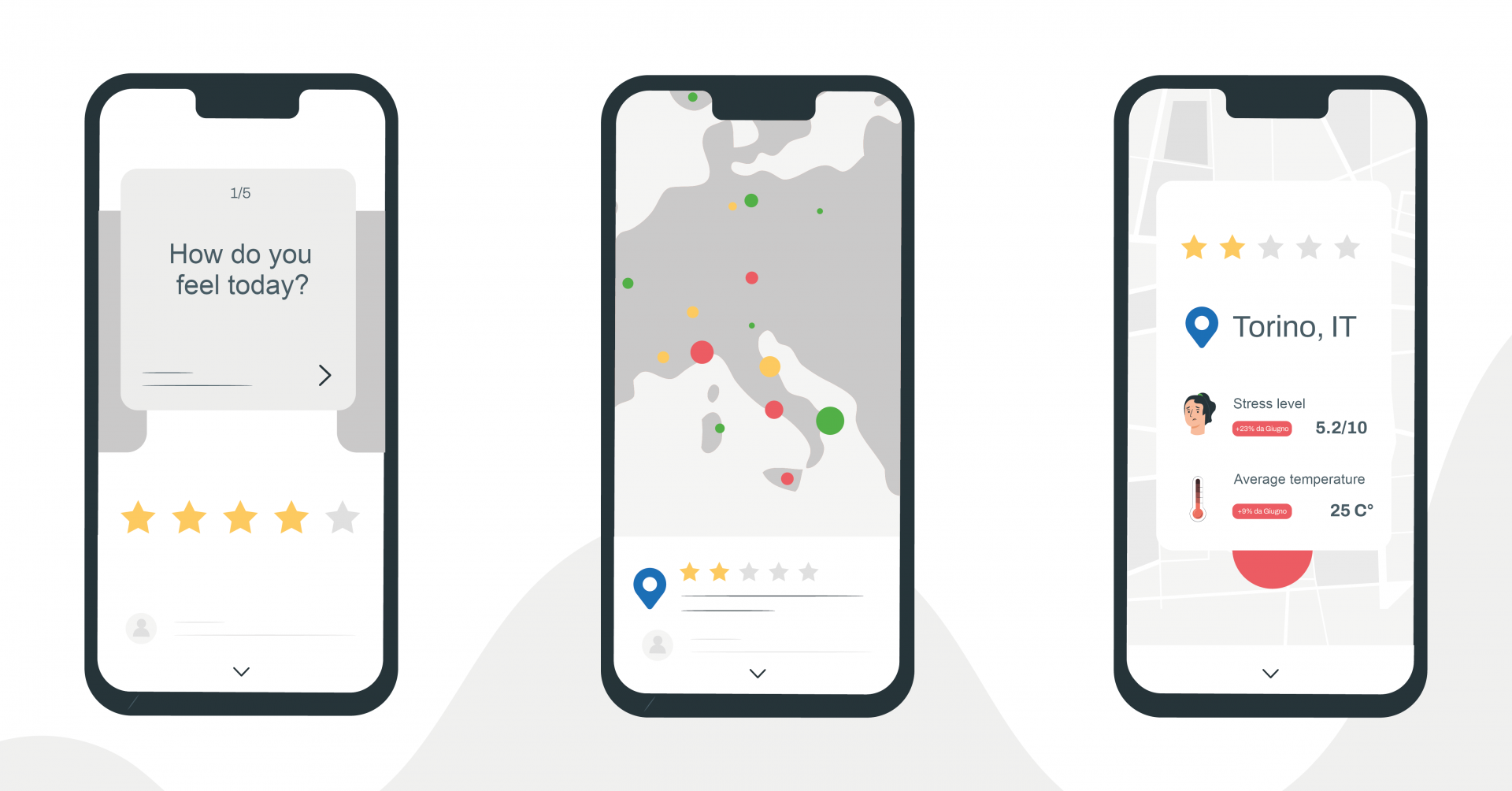
Sure! The app will be simple and intuitive, and it will be accessible both from smartphones and computers through a browser, thanks to the technology used to develop it (PWA, Progressive Web App).
You will sign up anonymously, and during your first login you will be asked for some demographic information, such as your gender and age range, as well as your informed consent to participate in the study and to share your location (approximate or precise).
Periodically, the app will show you a few quick questions that you can answer with a yes/no or by selecting a value on a scale from one to five. These questions will explore sleep quality, mood, stress, and psychological well-being, and will be developed by Barbara, the psychologist on the team.
To remind you to complete the questionnaire regularly (we all have a lot going on!), you will be able to set up automatic reminders. Moreover, by completing the questionnaire regularly, you will earn points and unlock personalised badges for each milestone you reach! Compete with your friends to see who is the most dedicated citizen scientist!
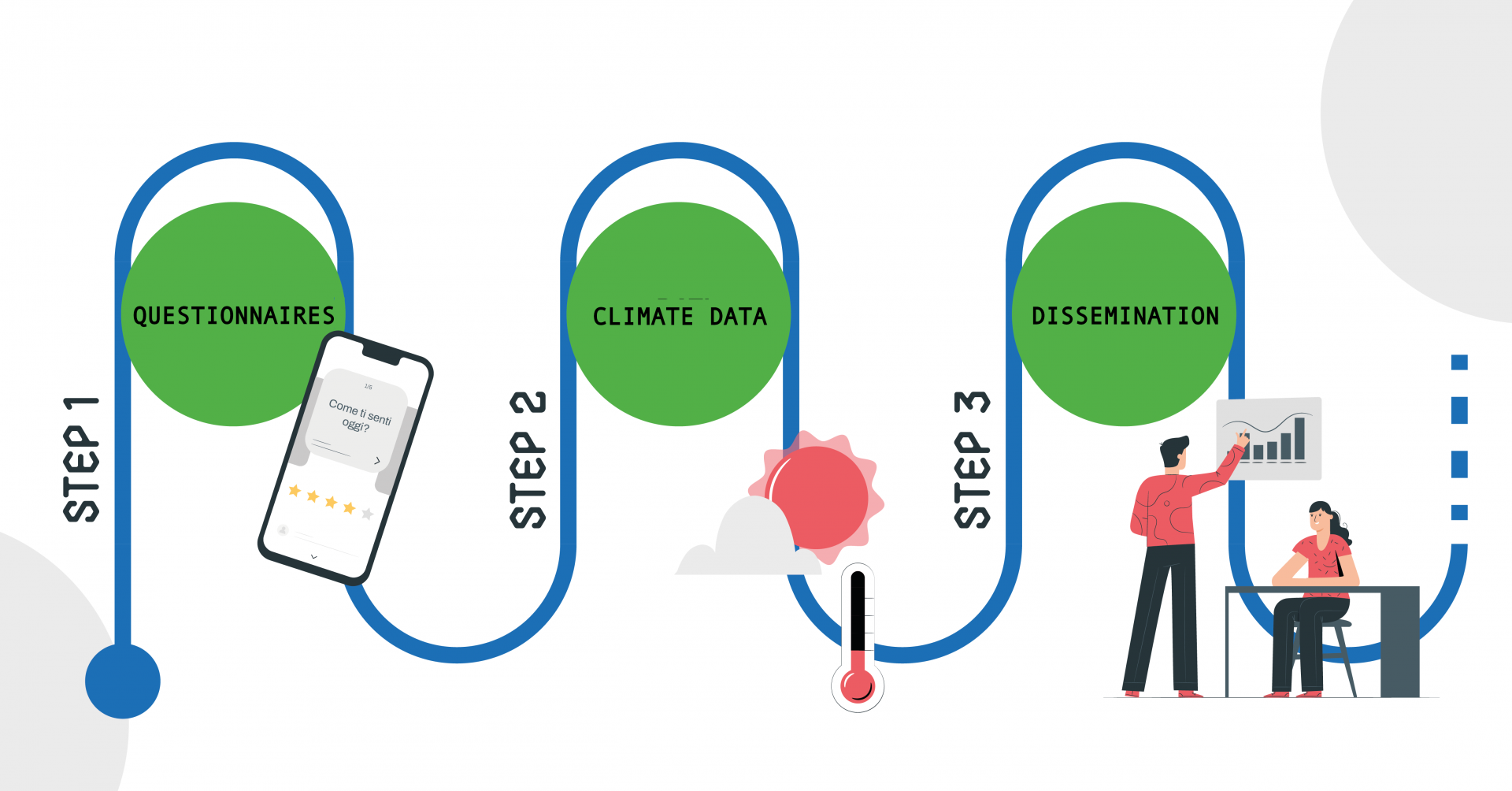
We will link your responses, collected anonymously, to public data on the climate and environmental conditions in the area where you live, such as temperature, heatwaves, heavy rainfall, and air quality.
Paola and Alessia, the biostatisticians on the team, will analyse the data to understand when and where climate conditions are associated with changes in people’s mental wellbeing.
Together, we will try to answer simple but important questions: Do climate events affect mental wellbeing? Which events have the greatest impact? Are there particular times, places, or groups of people who are more vulnerable?
With your help, we can turn the data we collect into a concrete tool for communities: useful information and insights to better understand local areas, guide local prevention,support initiatives,and promote networks for listening and mutual aid. Because climate change also affects our mental wellbeing, and facing it together means making our communities more aware, better prepared, and more resilient.
The data will always be shared with the whole community, in anonymous and aggregated form, through interactive maps, short outreach reports, and regular updates prepared by Matteo, the science communicator on the team.
We don’t want the data to remain locked away in a drawer: we want to bring them back to the places where they can be useful. That’s why we also plan to organise meetings with citizens, schools, associations, and institutions that would like to host us. With a minimum donation of €250, you can choose the venue for one of these outreach activities (online or in person).
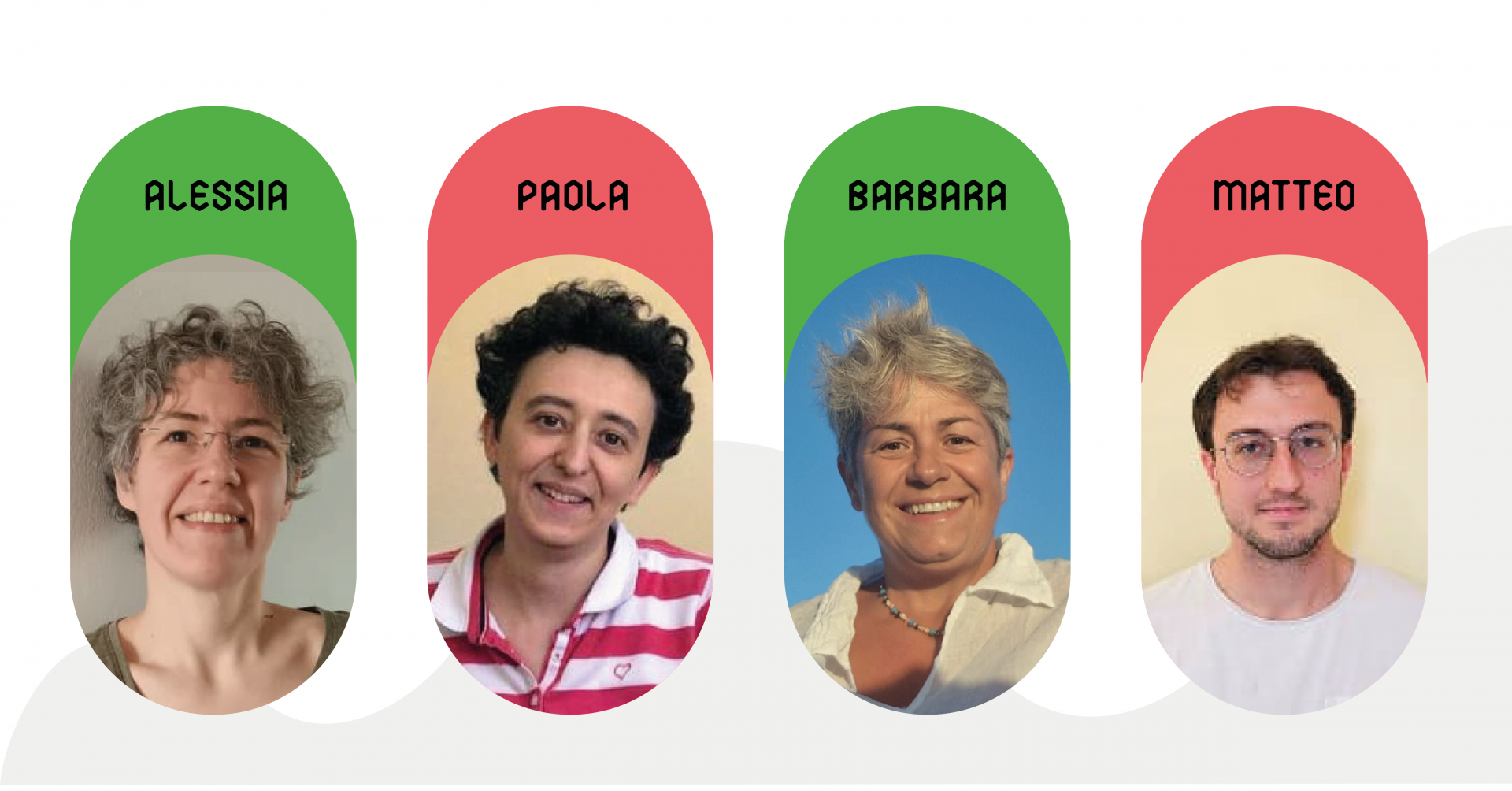
She is a researcher at the Department of Clinical and Biological Sciences. She studied computer science, but decided that her true calling was public health, and for more than 10 years she has been studying, using computational methods, how genes, the environment, and lifestyle influence the risk of developing diseases. She brings this experience to the project, but above all her experience with the ZOE COVID Study, which from 2020 to 2022 used a participatory app similar to the one proposed here to track the spread of COVID-19 among more than 4 million people in the UK.
She is a researcher at the Department of Psychology and a psychotherapist. For more than 20 years, she has taught the psychology of emotions and communication to students enrolled in the Professional Education degree programme. She also works on the inclusion of university students with learning disabilities, teaching study methods specifically tailored to this student population. More recently, through the PROBEN project, funded by the Ministry, she has coordinated group support activities for students experiencing high levels of anxiety during their studies.
He is a PhD student at the Department of Clinical and Biological Sciences. Trained as a mathematician, his PhD project focuses on developing statistical models to analyse and integrate patients’ preferences throughout the development and approval process of new therapeutic approaches. Over the past year, he has become passionate about Citizen Science and science communication, and strongly believes that this project can bring the value of research back to communities and local organisations, starting with his own area, the Tanaro Valley, which has been repeatedly affected by floods in recent years.
She is a full professor at the Department of Clinical and Biological Sciences. Her research applies advanced statistical methods to real-world health problems, with a particular focus on assessing the impact of environmental and social determinants on the health of individuals and communities. In this project, she contributes the methodological expertise needed to measure and understand the link between climate change and mental health, translating data into evidence that can help guide public health decisions and interventions.

Siamo Alessia Visconti, Barbara Sini, Matteo Bracco e Paola Berchialla. Lavoriamo all’Università di Torino. Abbiamo competenze diverse, informatica, psicologia, statistica, salute pubblica, ma una convinzione comune: per capire davvero l’impatto del cambiamento climatico sulle persone serve unire dati, tecnologia e ascolto umano. Alessia studia come geni, ambiente e stili di vita influenzino il rischio di sviluppare malattie, cercando di trasformare la complessità dei dati biologici in strumenti utili per la salute. Barbara lavora ogni giorno accanto a studentə universitarə con DSA e/o che vivono ansia e fragilità psicologiche, portando nel progetto uno sguardo attento al benessere emotivo e alle difficoltà che molte persone sperimentano oggi. Matteo sviluppa modelli statistici e strumenti innovativi per integrare il punto di vista dei pazienti nella ricerca medica e nei processi decisionali sanitari, con l’idea che i dati abbiano valore solo quando aiutano a migliorare la vita delle persone. Paola si occupa di applicare statistica avanzata e intelligenza artificiale per capire come ambiente, società e condizioni di vita influenzino la salute delle comunità. Ci siamo incontratə attorno a una domanda semplice ma urgente: quanto il cambiamento climatico sta influenzando il nostro benessere psicologico? Da qui è nata l’idea di creare un osservatorio partecipativo che permetta alle persone di contribuire direttamente alla ricerca, trasformando esperienze individuali in conoscenza collettiva. Crediamo nella scienza aperta, partecipata e accessibile. E crediamo che affrontare le sfide del presente richieda non solo competenze scientifiche, ma anche collaborazione, empatia e coinvolgimento delle persone.