by: Microbi Chef | data 08/05/2026
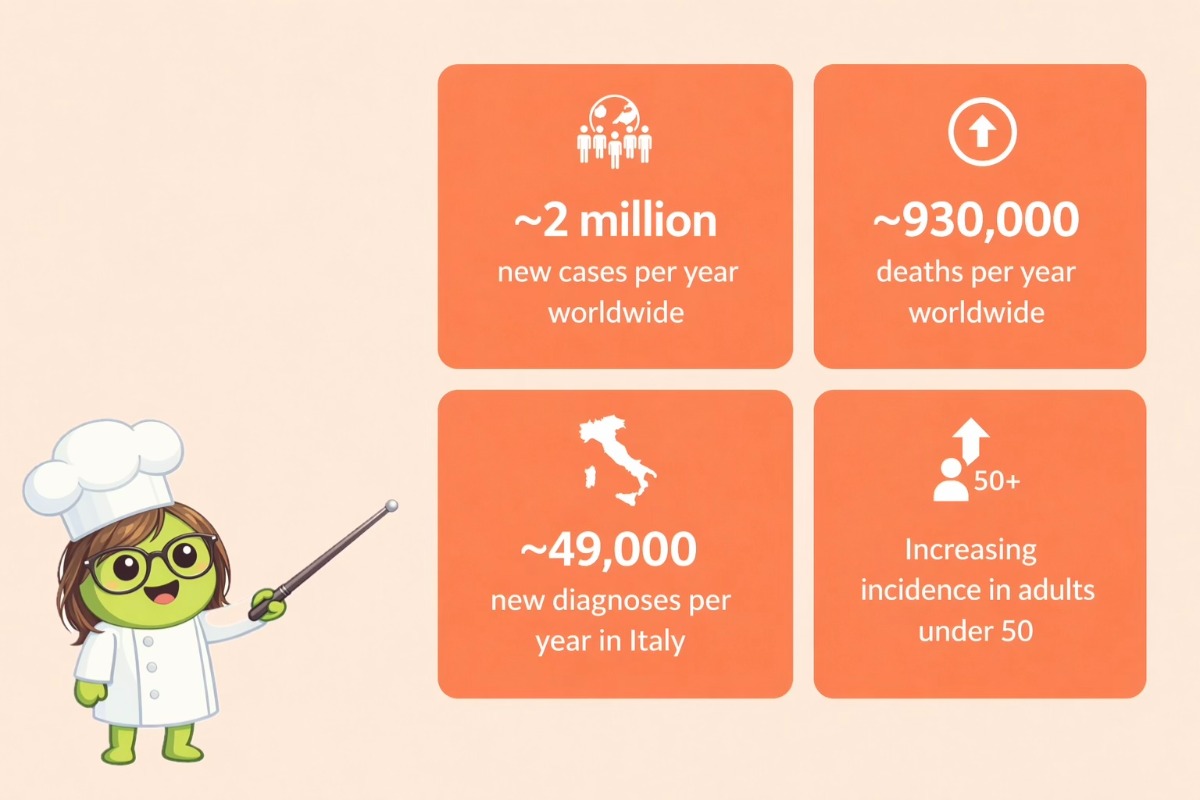
Colorectal cancer is among the most common cancers, and its incidence is increasing even among younger people.
Prevention and screening are essential, but once the disease develops, it can be difficult to treat effectively.
There is no single cure for colorectal cancer, because there is no single type of colorectal cancer. Each tumor arises from cells that have lost control over their growth and that evolve differently from one patient to another.
Every person has a unique genetic signature, a different lifestyle, and a distinct biological environment. So the question is: can we target the tumor where it is most vulnerable?
The Bioinformatics and Computational Systems Biology Lab at University of Milano-Bicocca, led by Professor Chiara Damiani, has developed computational methods that allow us to identify which nutrients a specific patient’s tumor tends to use preferentially.
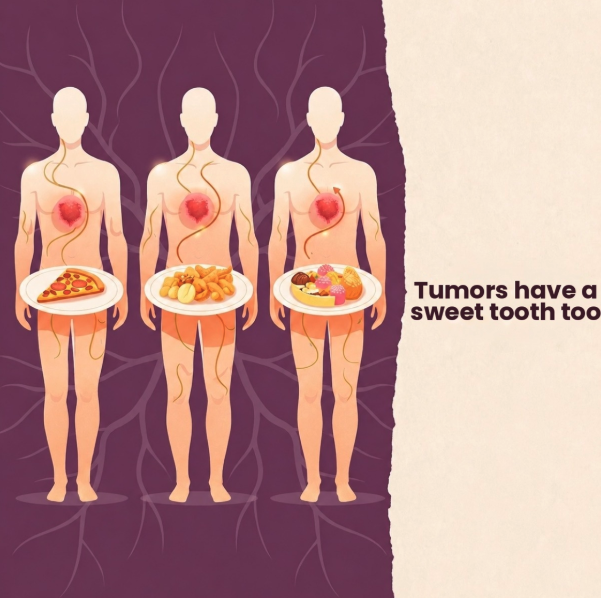
Not all the nutrients available to a tumor come directly from our diet.
Our gut is home to billions of microorganisms that transform what we eat.
Exclusive chefs, a different team for each patient, each with its own personalized recipe.
Is there a relationship between the microbiota and the tumor’s diet? To answer this question, we need new data.
A team of researchers and faculty members from University of Milano-Bicocca and the National Research Council is studying how the microbes living in our gut influence the nutrients that colorectal cancer uses to grow.
To do this, we need a more in-depth characterization of tumor samples for which we already have information about the patient’s gut microbiota composition. By analyzing the RNA of 20 colorectal tumors, we will take the first concrete step toward turning an intuition into scientific evidence.
Only with your support can we generate the data needed to understand whether it is truly possible to put cancer on a diet. Join us in this challenge!
Understanding the direct relationship between a patient’s diet and a tumor’s diet is extremely complex: there are too many steps and too many variables involved.
The gut flora, also known as the microbiota, is instead in very close contact with colorectal tumors. It acts as a more direct intermediary between what we eat and what the tumor uses.
If a relationship exists between the composition of the microbiota and the tumor’s metabolic preferences, then intervening on this “team of chefs” could be more realistic and adaptable than radically changing a patient’s diet.
The idea is not to completely change what we eat, but to understand whether modifying the microbiota composition could make the “recipe” less favorable to tumor growth.
Professor Federica Facciotti, an immunologist in the Department of Biotechnology and Biosciences at University of Milano-Bicocca, has already isolated and characterized the microbiota associated with several colorectal tumors, identifying which microorganisms make up each patient’s “team.”
If we could also identify the “favorite food” of those tumors, we could investigate the relationship between tumor diet and microbiota composition.
To do this, the first step is simple and concrete:
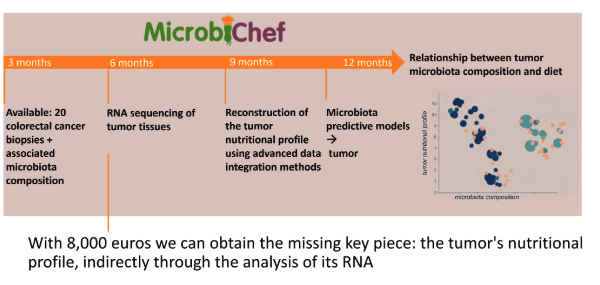
We need 8,000 euros to analyze the RNA of 20 tumors.
Thanks to the support of the University of Milan-Bicocca through BiUniCrowd, we need to raise on our own 4,000 euros: the University will contribute another 4,000 euros, doubling the value of your donation.
With your contribution, every euro counts double.
Twenty samples represent the minimum needed to start the study and identify the first signals.
If we manage to exceed the goal, we will be able to expand the number of samples analyzed, increasing our ability to identify more complex and less obvious relationships.
Every contribution is one more data point, a concrete step toward the possibility of understanding whether we can truly “put cancer on a diet.”
If we demonstrate that a relationship exists between the microbiota and the tumor’s diet, we will have taken a fundamental step. But it will only be the beginning.
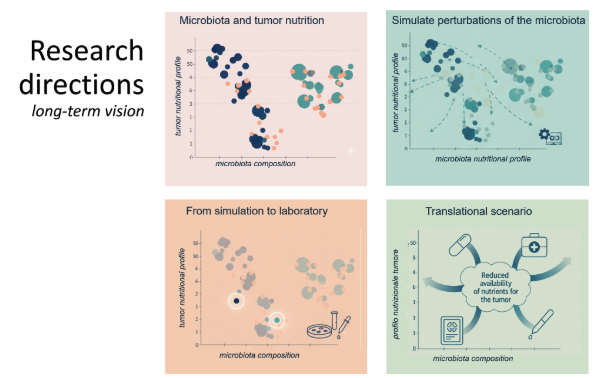
We want to understand whether it is possible to modulate the composition of the microbiota to make the availability of the tumor’s preferred nutrients less favorable. To do this, it is not enough to know “who is there” in the microbiota: we also need to understand what it does, which nutrients it transforms, and how.
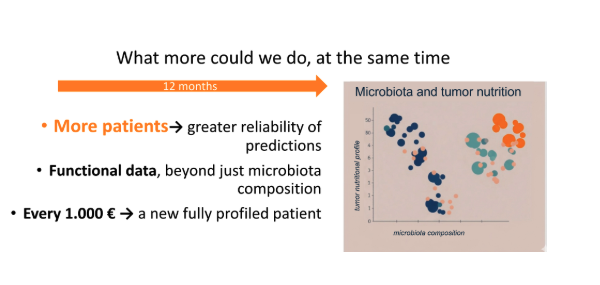
We can obtain this information by also analyzing the RNA of the microbiota and using computational models to simulate how changes in the “team” influence what ultimately reaches the tumor’s “plate.”
The hypotheses generated by computer simulations can then be tested in the laboratory, assessing which nutrients are actually produced by specific microbial compositions.
If demonstrated and properly characterized, the relationship between tumor diet and microbiota composition could open the way to personalized strategies for microbiota modulation as a potential therapeutic adjunct.
The project starts from the collaboration between researchers experienced in data analysis and the study of tumor metabolism, and researchers specialized in the interaction between the microbiota and cancer.
We combine expertise in mathematical modeling, artificial intelligence, and experimental biology to address the same question from two complementary perspectives: understanding how the microbiota may influence tumor growth.
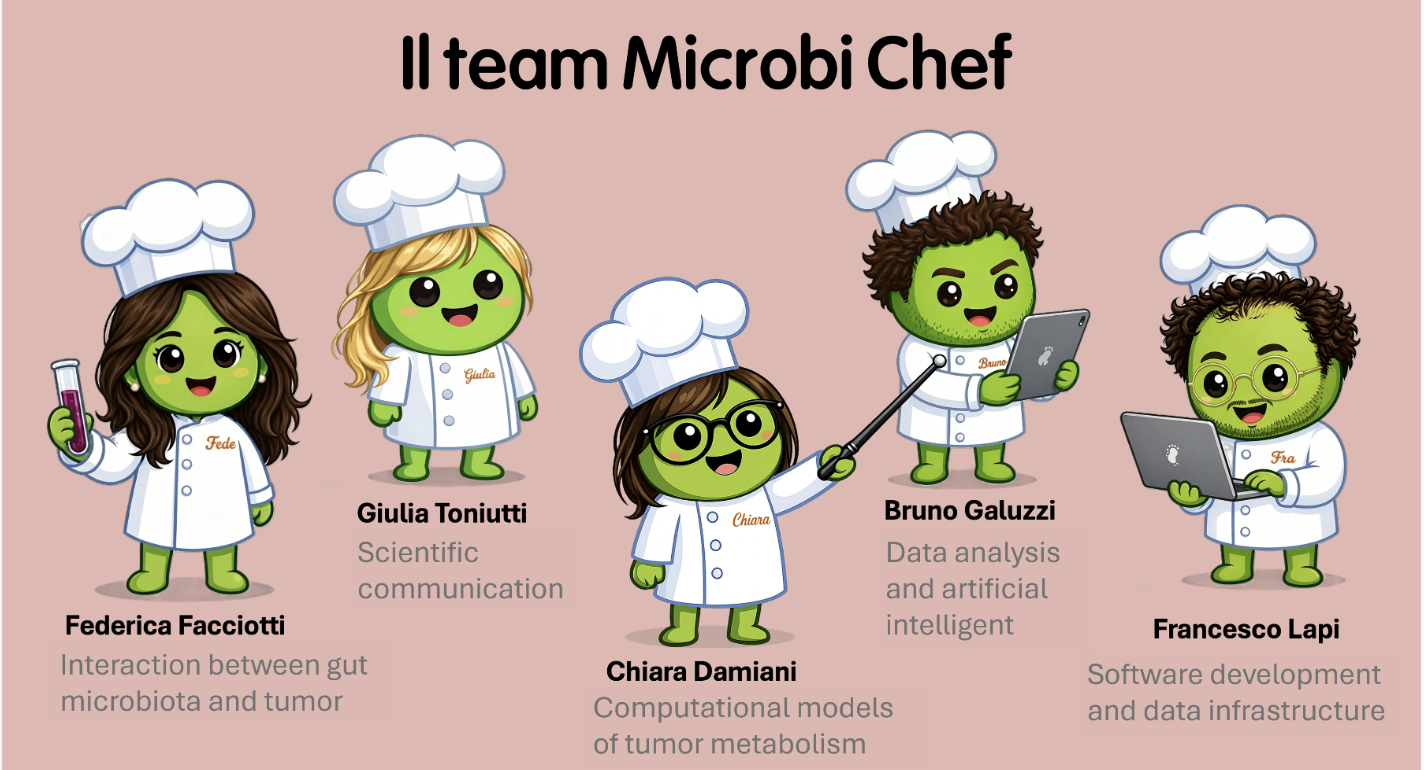
Team members and collaborators:
Chiara Damiani – Computational lead and scientific coordination
Associate Professor in Computer Science, head of the Bioinformatics and Computational Systems Biology laboratory (UNIMIB). Expert in metabolic modeling, multi-omics integration, and quantitative analysis of complex biological systems.
Federica Facciotti – Experimental lead
Associate Professor in General and Clinical Pathology, head of the Mucosal Immunology laboratory (UNIMIB). Expert in microbiota–tumor interactions and in the modulation of immune responses in oncology.
Bruno Giovanni Galuzzi – Predictive models and Artificial Intelligence
Researcher in bioinformatics (CNR-IBSBC). Focuses on omics data integration and the development of Machine Learning models for biotechnological applications.
Francesco Lapi – Software development and data infrastructure
PhD student in Converging Technologies for Biomolecular Systems (UNIMIB). Develops computational pipelines and infrastructures for sequencing data analysis, at single-cell and spatial level.
Giulia Toniutti – Science communication and outreach
Biotechnologist with a Master’s in Science Communication and theatrical training: combines these skills in science-theatre performances. Expert in translating complex scientific content into accessible language for non-specialist audiences.
Alberto Mazzari – Visual strategy and graphic materials
Responsible for the visual identity of the campaign, creation of graphic materials and digital content (logo, visuals, layout).
Emanuele Guanella – Support to research
Industrial Biotechnology Master’s student. Working on a thesis within the Microbi Chef project.
Siamo ricercatori e docenti dell’Università di Milano-Bicocca e del CNR studiano come microrganismi che abitano il nostro intestino possano influenzare ciò che il tumore utilizza per crescere. Microbi chef è team interdisciplinare che integra competenze computazionali, sperimentali e comunicative, con esperienza consolidata in ricerca competitiva, gestione di progetti complessi e divulgazione scientifica. I membri del team: Chiara Damiani – Referente computazionale e coordinamento scientifico Professoressa Associata in Informatica, responsabile del laboratorio di Bioinformatics and Computational Systems Biology (UNIMIB). Esperta in modellazione metabolica, integrazione multi-omics e analisi quantitativa di sistemi biologici complessi. Federica Facciotti – Referente sperimentale Professoressa Associata in Patologia Generale e Clinica, responsabile del laboratorio di Immunologia mucosale (UNIMIB). Esperta nell’interazione microbiota–tumore e nella modulazione delle risposte immunitarie in ambito oncologico. Bruno Giovanni Galuzzi – Modelli predittivi e Intelligenza Artificiale Ricercatore in bioinformatica (CNR-IBSBC). Si occupa di integrazione di dati omici e sviluppo di modelli di Machine Learning per applicazioni biotecnologiche. Francesco Lapi – Sviluppo software e infrastruttura dati PhD student in Tecnologie Convergenti per i Sistemi Biomolecolari (UNIMIB). Sviluppa pipeline computazionali e infrastrutture per l’analisi di dati NGS e single-cell. Giulia Toniutti – Comunicazione scientifica e divulgazione Biotecnologa con Master in Comunicazione della Scienza e formazione teatrale: coniuga il tutto in spettacoli di teatro-sienza. Esperta nella traduzione di contenuti scientifici complessi in linguaggio accessibile per pubblico non specialistico. Alberto Mazzari – Strategia visuale e materiali grafici Supporto alla definizione dell’identità visiva della campagna, creazione di materiali grafici e contenuti digitali (logo, visual, layout).